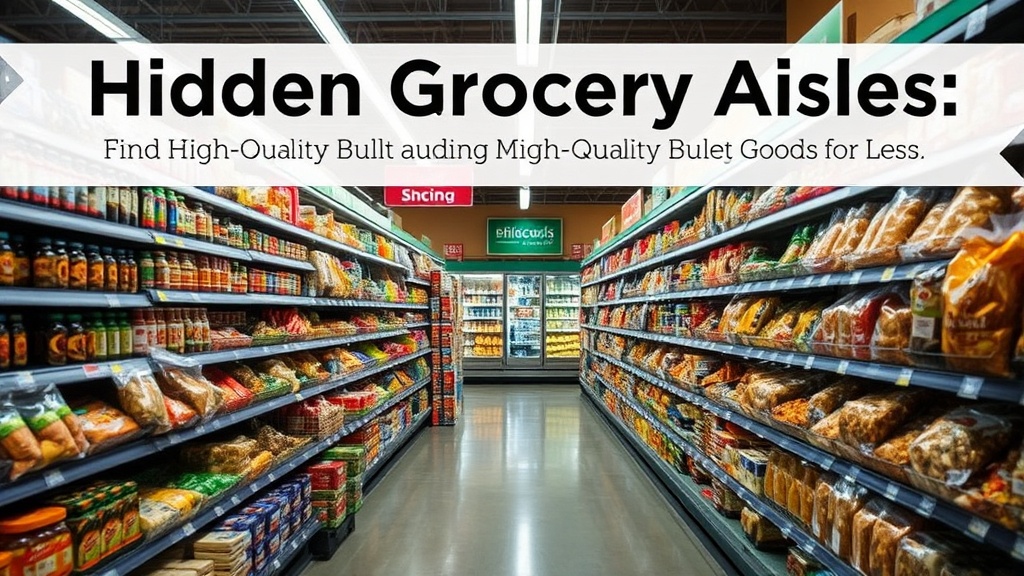
Hidden Grocery Aisles: Finding High-Quality Bulk Goods for Less

You will learn how to identify high-margin bulk goods, calculate true unit price efficiency, and locate high-quality staples in non-obvious sections of the grocery store to reduce your total household food expenditure.
The Unit Price Fallacy: Why Bulk Isn't Always a Bargain
Most shoppers assume that a larger container automatically yields a lower cost per unit. This is a mathematical error. To shop like a forensic accountant, you must ignore the large-font "Sale" price and look exclusively at the price per ounce, price per pound, or price per count located in the fine print on the shelf tag. A 48-ounce container of organic peanut butter may be priced at $7.99, while a 32-ounce jar is $5.49. Without calculating the unit price, you might miss that the smaller jar is actually 12% more cost-effective.
When navigating the bulk bins or large-format aisles, you must account for "hidden costs" such as packaging weight and spoilage risk. If you buy a 5-pound bag of quinoa because the unit price is lower, but your household consumption rate is low, the risk of the product going rancid before it is finished represents a negative ROI. Always cross-reference the bulk price with your average monthly consumption rate to ensure the savings aren't negated by waste.
The International Aisle: The Secret to High-Quality Staples
The international food aisle is often the most undervalued asset in a grocery store. This section frequently houses high-quality, high-volume staples at a fraction of the cost of the "specialty" or "health food" sections. For example, if you are looking for jasmine rice, avoid the small bags in the grain aisle. Instead, head to the international section to find 20-pound bags of high-grade long-grain rice. The price-per-pound differential can often exceed 40%.
- Spices: Instead of buying $6.00 glass jars of cumin or turmeric in the spice aisle, look for the larger bags in the Hispanic or Indian food sections. These are often the same high-grade spices but sold in formats that drastically reduce the cost per ounce.
- Oils and Vinegars: High-quality olive oils and balsamic vinegars are often marked up heavily in the gourmet aisle. Check the Mediterranean or European sections for larger, more economical bottles.
- Legumes and Grains: Lentils, chickpeas, and various types of beans are significantly cheaper when purchased in the large-format bags found in the international aisles compared to the canned or small-bag versions.
Navigating the "Health Food" Markup
The "Natural" or "Organic" labeled aisles are often high-margin zones designed to capture premium-seeking customers. While these products are high quality, the price-per-unit is frequently inflated due to the perceived value of the label. To optimize your budget, you must practice product substitution analysis. Instead of buying "Organic Almond Butter" in the health food aisle, look for the standard almond butter in the regular nut butter aisle, or better yet, find the large-scale jars in the bulk section.
A highly effective technique is to look for store-brand organic options. Many large retailers, such as Whole Foods (with 365 brand) or Kroger (with Simple Truth), offer organic staples that meet high-quality standards but lack the marketing overhead of name brands. This allows you to maintain a high-quality diet while keeping your price-floor low. For more advanced strategies on maximizing these savings, you can learn how to master grocery store digital coupons to further reduce the cost of these premium items.
The Frozen Section: Quality Control and Volume Savings
The frozen food aisle is a prime location for high-quality bulk goods, particularly when it comes to produce and proteins. Frozen vegetables are often flash-frozen at peak ripeness, meaning the nutritional density and quality can actually exceed that of "fresh" produce that has traveled thousands of miles. To maximize ROI here, look for the large-format bags of frozen berries, spinach, or broccoli.
When purchasing frozen proteins, such as salmon or chicken breasts, the price-per-pound in the frozen section is frequently lower than the fresh meat counter. However, you must be diligent about checking the ingredient list. Some frozen "value" packs include heavy salt solutions or glazes that increase the weight and cost without adding nutritional value. Always calculate the price per pound of the actual protein, excluding any added water or salt weight.
The Perimeter vs. The Center: A Strategic Approach
Traditional grocery store layouts are designed to lead you through high-margin impulse aisles. To maintain a disciplined budget, you must treat your shopping trip like a supply chain audit. The perimeter of the store—where you find produce, meat, and dairy—is where you find your most essential, high-quality raw materials. The center aisles are where the highly processed, high-margin goods live.
- Audit the Perimeter First: Secure your high-quality proteins, fresh produce, and dairy. This ensures you have the foundation of your meals before you are distracted by processed goods.
- Targeted Center-Aisle Strikes: Only enter the center aisles for specific, pre-determined items like grains, oils, or spices that you have already identified as being cheaper in larger formats.
- The Bottom Shelf Rule: Retailers place the most expensive, high-margin brands at eye level. Always look at the bottom shelves for the bulk-sized, generic, or store-brand versions of the same product. This is where the true unit-price savings are hidden.
"The goal is not to buy less, but to buy better for less. A disciplined approach to unit-price analysis turns a standard grocery run into a strategic procurement exercise."
Bulk Buying: The Inventory Management Method
To successfully use bulk goods, you must move from a "consumer" mindset to an "inventory manager" mindset. This means you are no longer just buying food; you are managing a stock of household assets. Before you head to the store, perform a physical inventory count of your pantry and freezer. There is no benefit to buying a 5-pound bag of flour if you already have 3 pounds in the pantry and your current stock will be used up before the next shopping cycle.
Once you have your list, apply the Rule of Three:
- Identify the staple: (e.g., Oats)
- Locate the best unit price: (e.g., The 42oz container at $0.12/oz vs. the 12oz box at $0.22/oz)
- Verify storage capacity: Do you have an airtight container to prevent spoilage?
The Hidden Value of the "Reduced" Section
Many high-quality grocery stores have a "clearance" or "manager's special" section, often located near the meat or bakery departments. This is a goldmine for high-quality bulk goods that are nearing their "sell-by" date but are still perfectly safe and high in quality. For example, a high-end steak or a large batch of artisan bread marked down by 50% because it must sell by tomorrow is a high-ROI purchase if you plan to freeze it immediately.
This technique requires immediate action and a plan. If you buy a bulk quantity of meat on clearance, you must have a plan to portion and freeze it the moment you return home. This is a way to acquire premium, high-quality protein at a price-floor that is nearly impossible to find in the regular aisles. It requires foresight, but the mathematical return on these purchases is significant.
Final Checklist for High-Quality Bulk Shopping
Before you finalize your cart, run through this rapid-fire audit to ensure you haven't fallen for a high-margin trap:
- Did I check the unit price? (Not just the total price).
- Did I check the international aisle? (For spices, grains, and oils).
- Did I check the bottom shelf? (For store brands and larger formats).
- Do I have the storage capacity? (To prevent spoilage and negative ROI).
- Is the quality justified? (Comparing the organic/specialty version vs. the standard version).
By applying these principles of procurement and inventory management, you shift from being a passive consumer to an active household CFO. You are no longer just "going to the store"; you are executing a strategic acquisition of high-quality goods at the lowest possible price-per-unit.