Markdown Shopping 101: Your Store's Secret Discount Schedule Is Saving Me $840 a Year

I'm going to tell you something that changed my grocery game more than any coupon app ever has: every store has a markdown schedule, and almost nobody knows it.
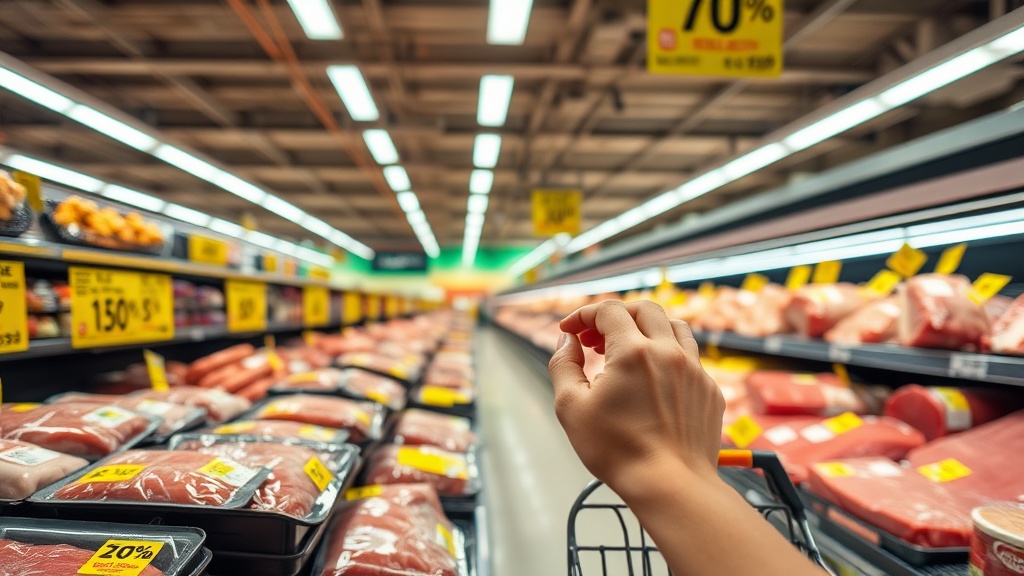
I'm not talking about weekly sales. I'm talking about the quiet, unglamorous moment when a store employee walks through the meat department with a sticker gun and slaps 30–50% off labels on perfectly good chicken thighs because the sell-by date is three days out. Or when the bakery pulls yesterday's artisan bread and drops it to $1.50. Or when the produce section quietly bags up slightly soft avocados for a dollar.
This happens on a predictable schedule. And once you learn your store's rhythm, you stop paying full price for things you were going to buy anyway.
Why Markdowns Exist (And Why They're Not Sketchy)
Let's get this out of the way: marked-down meat is not bad meat. Sell-by dates are inventory management tools for the store, not safety expiration dates for you. The USDA is pretty clear on this — a sell-by date tells the store when to rotate stock, not when food becomes dangerous.
Stores mark things down because they'd rather sell chicken thighs at $1.29/lb than throw them away at $3.49/lb. That's rational. And you buying them at $1.29/lb and freezing them that night? That's also rational. Everyone wins.
I've been tracking my markdown purchases for about two years now, and the average discount I see is 38% off the regular price. On proteins specifically, it's closer to 42%. That is significant money over a year.
The General Markdown Schedule (Most Major Chains)
Every store is slightly different, but after talking to employees, reading way too many Reddit threads from grocery workers, and just showing up at weird times for two years, here's the general pattern:
Meat Department:
- Most stores receive major meat shipments on Thursday or Friday (ahead of the weekend rush)
- This means the previous shipment gets marked down Monday through Wednesday, especially Monday morning and Tuesday evening
- Best window: Monday 7–9 AM or Tuesday after 6 PM
- Typical discount: 30–50% off, sometimes more on ground beef and pork
Bakery:
- Bakery markdowns happen daily, usually in the morning when fresh items are baked and yesterday's stock gets pulled
- Best window: 8–10 AM any day, but especially Monday (weekend overstock)
- Look for the clearance rack or "day old" shelf — bread, rolls, muffins at 50% off or more
- Most bakery items freeze beautifully. I slice artisan loaves before freezing and pull out what I need
Produce:
- Produce markdowns are the least predictable but usually happen mid-morning
- Look for bagged produce — stores bag up items that are slightly past their visual prime and sell them at steep discounts
- Bananas, avocados, berries, and bagged salads are the most commonly marked down
- Best for: anything you'll use within 1–2 days or can freeze/cook immediately
Dairy:
- Yogurt and milk get marked down 3–5 days before sell-by
- Check the clearance endcap in the dairy aisle — this is where the good stuff hides
- I've gotten Greek yogurt for $0.50 per container multiple times this way
Store-Specific Notes
Based on my experience and what I've confirmed with employees:
Kroger/Kroger-family stores (Fred Meyer, Ralphs, etc.): Markdowns tend to happen early morning. They use yellow "reduced" stickers. Meat markdowns on Monday and Tuesday are especially good. Their manager's special section in meat is worth checking every single trip.
Walmart: Markdowns are less predictable here — they happen when employees get around to it, which varies by store. But check the clearance endcaps in grocery and the reduced-price meat section. Early morning is still your best bet.
Aldi: Okay, you know I love Aldi. Their markdown system is less formalized, but they do mark down produce and bakery items. The "Aldi Finds" aisle sometimes has food items on clearance too. Ask your store's manager when they typically mark things down — they're usually pretty open about it.
Target: Target marks down grocery items on a fairly regular schedule. Meat and bakery markdowns tend to happen in the morning. Their Cartwheel/Circle app sometimes stacks with in-store markdowns, which is a beautiful thing.
The Math on a Real Week
Last Monday I hit Kroger at 7:45 AM specifically for markdowns. Here's what I grabbed:
| Item | Regular Price | Markdown Price | Savings |
|---|---|---|---|
| 3 lbs chicken thighs | $8.97 | $4.49 | $4.48 |
| 1.5 lbs ground beef (85/15) | $8.24 | $4.94 | $3.30 |
| Artisan sourdough loaf | $4.99 | $1.99 | $3.00 |
| 6 Greek yogurts | $5.94 | $3.00 | $2.94 |
| Bag of "imperfect" bell peppers | ~$4.50 | $1.50 | $3.00 |
Total savings on one trip: $16.72
If I do that once a week — and I usually can — that's roughly $70/month in savings just from markdowns. Over a year, that's $840. And that's conservative, because some weeks I find even better stuff.
The Rules I Follow
1. Only buy markdowns on things I was already going to buy (or can freeze). A 50% off cake I don't need is still money spent on cake I don't need. The deal has to serve the plan.
2. Freeze immediately. If I'm buying marked-down meat, it goes straight into the freezer when I get home. I portion it into meal-sized bags, label them with the date and weight, and stack them. No exceptions.
3. Don't be precious about sell-by dates. A sell-by date of tomorrow on a package of pork chops means nothing if those pork chops are going in my freezer for three months. The clock stops when you freeze.
4. Build the trip around the markdowns. I don't go to the store and hope for markdowns. I go during markdown hours specifically, grab what's available, and then plan meals around what I found. Meal planning works better when it's flexible like this.
5. Track what you save. I know $840/year sounds like a made-up number, but I only know it because I wrote it down. Keep a simple note on your phone — markdown item, regular price, what you paid. After a month, the math will motivate you to keep going.
The Honest Caveat
This strategy requires flexibility. You can't walk into Kroger on Monday morning with a rigid meal plan and expect the markdowns to match it. They won't. You have to be willing to say "oh, pork shoulder is 40% off, guess we're doing pulled pork this week" and adjust.
If that sounds stressful, it's not for you, and that's fine. But if you're the kind of person who already checks prices and compares units — which, if you're reading this blog, you probably are — then markdown shopping is just the next level of the same skill.
The deals are there every single week. The store is practically begging you to take them. You just have to show up at the right time.