Spring Break Feeding: The $150 Freeze-Ahead Strategy for Chaos Week

If you have school-age kids, you already know what's coming. Spring break hits, and suddenly you're feeding small humans every single meal, every single snack, every single "I'm hungry" at 10:47 AM for an entire week. Your grocery bill doesn't just go up — it doubles.
I've done four spring breaks now. The first one, I had no system. We spent close to $280 that week on groceries, and I still ran out of easy food by Wednesday. My daughter lived on cereal and cheese sticks while I stress-scrolled my Kroger app wondering where all my money went.
Now I have a system. And I'm sharing it before you need it, because the window to actually use it is right now — two to three weeks before break.
The whole thing runs on one idea: buy strategically this week, batch cook next week, and only buy fresh stuff the actual week of break. Total budget for the pre-loading phase: $150. That's $75–$80 each week across two weeks of prep, which is less than the weekly panic spending you'd otherwise do.
Here's how it works.
Why Your Grocery Bill Spikes (And the Math That Fixes It)
A normal school week, my family of three (me, my husband, my daughter) runs about $130–$150 in groceries. Spring break week? Last year I tracked it: $247. Not because I bought fancy food. Because I was buying reactive food — snacks grabbed when we ran out, lunch ingredients I forgot about, dinner components I picked up four separate times because I didn't have a plan.
The freeze-ahead strategy works because it shifts your spending to when you're calm and thinking clearly, and shifts your cooking to when you have slightly more time (the week before break, not during it). By break week, all you need is fresh produce, dairy, and a few snack restocks. You're not doing real cooking. You're just thawing things.
Week One: What to Buy This Week
This is your protein and shelf-stable week. You're buying things that freeze well and go on sale heavily before spring break (loyalty programs at Kroger, Harris Teeter, and Food Lion in Raleigh tend to run family-friendly deals the week before).
Proteins to stock now:
- Chicken thighs — bone-in, skin-on freeze better than breasts. Buy a 5–6 lb family pack and watch for loyalty card sale pricing at Food Lion or Kroger; thighs run noticeably cheaper than breasts even at regular price. (My local Raleigh prices in early March 2026 were $1.49–$1.99/lb on sale — yours will vary.)
- Ground turkey — buy 3 lbs minimum. Freezes raw in portions, incredibly versatile.
- Pork shoulder (a 3–4 lb roast) — this becomes pulled pork for the whole week. One cut, multiple meals.
Watch for Kroger Plus deals on proteins this week. They often do multi-package savings (buy 2 for $X off) on chicken and ground beef leading up to school breaks. The Harris Teeter VIC card frequently stacks with digital coupons — load them in the app before you even step inside.
Cheap carbs and shelf-stable:
- Two 2-lb bags of pasta (store brand — check current price, usually under $2 each)
- A 5-lb bag of potatoes (roughly $4–$6 depending on store and week)
- Rice if you use it (a 5-lb bag goes a long way)
- A bulk jar of pasta sauce or two 24-oz jars
Snack baseline:
This is where budgets bleed out fast. This week, do your Costco run if you're a member. The unit math on kids' snacks at Costco is genuinely brutal to compare against grocery store pricing — granola bars, fruit snacks, apple juice boxes, and popcorn all pencil out significantly cheaper per serving. One Costco snack haul at $40–$50 covers the whole week of spring break grazing and costs less than buying the same volume at Kroger in smaller packages throughout the week.
If you're not a Costco member, look for the Kroger Simple Truth line and buy the largest package size available. The unit price difference between the "family size" and regular chips bags at Kroger is usually 30–40%.
Week Two: Batch Cook and Freeze
The weekend before spring break is when you cook. Block out three hours on Saturday or Sunday. I do it while listening to a podcast, honestly — it's not stressful cooking, it's repetitive, satisfying cooking.
What to batch cook:
Breakfast burritos (make 12–16)
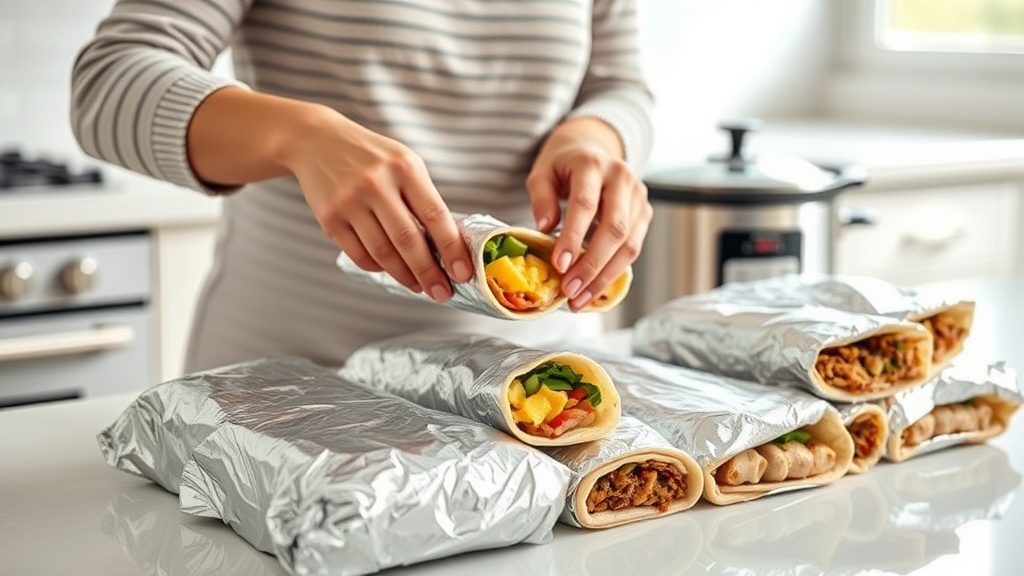
Scramble eggs with your ground turkey or breakfast sausage, add shredded cheese and cooked potatoes or hash browns. Wrap in flour tortillas, wrap each one in foil, freeze in a bag. Morning of spring break: pull two out, microwave 2 minutes from frozen. Done. My daughter's been eating these since she was four and she still requests them.
Sheet pan chicken thighs (two full pans)
Season, roast at 425°F until done, cool completely, portion into gallon bags. Two thighs per meal. Freeze flat. Day-of effort: thaw in fridge overnight, reheat in oven or air fryer for crispy skin. Add whatever fresh vegetable you have. Dinner in 15 minutes.
Slow cooker pulled pork
Season your pork shoulder with whatever you have (I use garlic powder, cumin, salt, paprika), throw it in the slow cooker with half a can of diced tomatoes, cook on low 8 hours. Shred, portion into containers, freeze. This becomes pulled pork sandwiches, pork rice bowls, and pork tacos across three separate nights of spring break. One cooking session, three different meals.
Pasta sauce (double batch)
Make your go-to pasta sauce. Double it. Freeze half in a zip bag flat so it thaws fast.
Breakfast casserole
Eggs, shredded hash browns, cheese, whatever leftover breakfast meat you have. Bake in a 9x13, cut into squares, freeze individually. Excellent for the mornings when you can't make breakfast burritos work.
What NOT to freeze (for this purpose):
Fresh salads (obviously), cucumbers, and raw tomatoes — they go watery and sad. Leafy greens like spinach and kale can technically be frozen and work fine blended into smoothies or cooked into soups, but if you're expecting them to be crisp and fresh afterward, that's not happening. Don't freeze dairy sauces or anything cream-based. And honestly, don't freeze whole avocados — I made this mistake once and I still think about it. (Mashed avocado with a squeeze of lemon freezes passably, but fresh avocados are a break-week buy anyway.)
Break Week: Fresh Buys Only
During actual spring break, your grocery run should be fast and cheap. You're buying:
- Fresh produce (whatever's on sale — this week it'll probably be spring asparagus, bell peppers, apples)
- Milk, eggs (replenish)
- Fresh bread for the pulled pork sandwiches
- Juice boxes (if you didn't Costco them) or a big jug of lemonade
- One or two "fun" snacks you let your kid pick out — this is intentional. It's not the whole budget, it's the morale budget.
Target break week fresh spending: $50–$60. You're not doing real shopping. You're restocking perishables around a freezer full of real food.
The Five Meals That Actually Get Me Through
In practice, these are the five dinners I rotate through spring break, all pulled from the freezer prep above:
- Breakfast burritos (morning or breakfast-for-dinner) — literally just microwave and eat
- Sheet pan chicken thighs with whatever roasted vegetable — reheat, done
- Pulled pork night #1 — sandwiches on fresh bread with coleslaw from a bag
- Pasta night — boil pasta, heat sauce, done in 12 minutes
- Pulled pork night #2 — rice bowls with frozen peas or whatever vegetable
That's five dinners. Lunches are handled by breakfast burritos or leftovers. Breakfasts are handled by the casserole and fruit. Snacks are handled by Costco. The whole week is covered without a single "oh no what do I make for dinner" moment.
The Snack Audit: Budgeting the Grazing
Kids during spring break don't eat three meals. They eat seventeen snacks and call it a day. Budget for this honestly.
The Costco snack haul I mentioned above is the most important part of not overspending during break week. The unit math on bulk snacks is genuinely brutal when you compare it to normal grocery store packaging. When I checked prices in early March 2026 at my Raleigh-area Costco and Kroger — and these will vary by your location and the week you shop — granola bars in a 60-count box were roughly half the per-bar cost of a 10-count box at Kroger. Apple juice boxes, string cheese, and individual popcorn bags showed similar gaps, usually 40–60% cheaper per unit in bulk format.
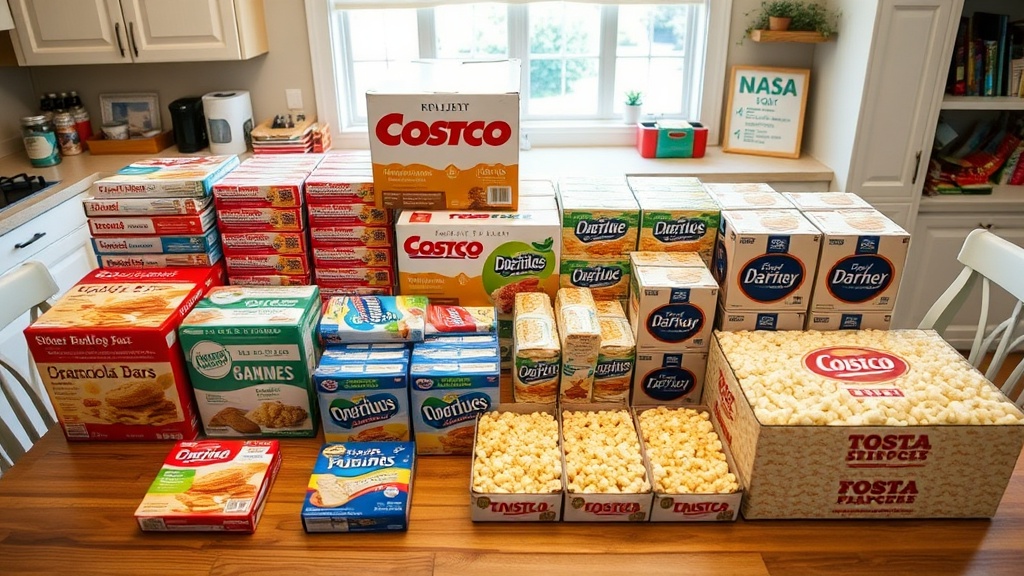
The specific numbers move around, but the pattern holds: buying the same snacks in reactive small quantities during spring break costs you roughly double what a pre-planned bulk run costs. One Costco haul for the whole week of grazing — budget $40–$50 — beats four midweek Kroger trips every time.
Non-members: skip the Costco advice and buy the largest package format available at your grocery store. The unit price gap between a regular-size bag and the "family size" is usually 30–40% even within the same store.
The Full Budget Breakdown
| Week | What You're Buying | Target Spend |
|---|---|---|
| This week (prep) | Proteins, carbs, shelf-stable, Costco snacks | $75–$80 |
| Next week (cook) | Minimal — maybe extra eggs, tortillas | $15–$20 |
| Break week | Fresh produce, dairy, bread, morale snacks | $50–$60 |
| Total | $140–$160 |
Compare that to: normal $150 week + $250 spring break reactive week = $400. The freeze-ahead system saves $240, roughly, while also making the actual week less stressful. That's the part I actually care about. The money is great. The not-standing-in-my-kitchen-exhausted-deciding-what-to-make is better.
A Note on the Prep Window
Right now is the exact moment to do this. If your kid's spring break is in two to three weeks (most Raleigh/Triangle area schools, it's mid-to-late March), you're in the prep window. You have time to buy this week without paying premium spring-break pricing, and you have a weekend next week to cook before the chaos starts.
By the week of break, the deals shift. Stores know what's happening. Snack prices creep up, the impulse-buy end caps are fully loaded, and the fresh-looking "easy meal" kits appear at $14.99 each. Your freezer full of food is your protection against all of it.
This system isn't extreme. It's about four hours of your time across two weekends and roughly $150. Spring break is survivable. You just have to plan before it becomes an emergency.
— Lily
If you try the breakfast burrito batch, come back and tell me how it went. Or if your kid somehow didn't like them, I have so many questions.