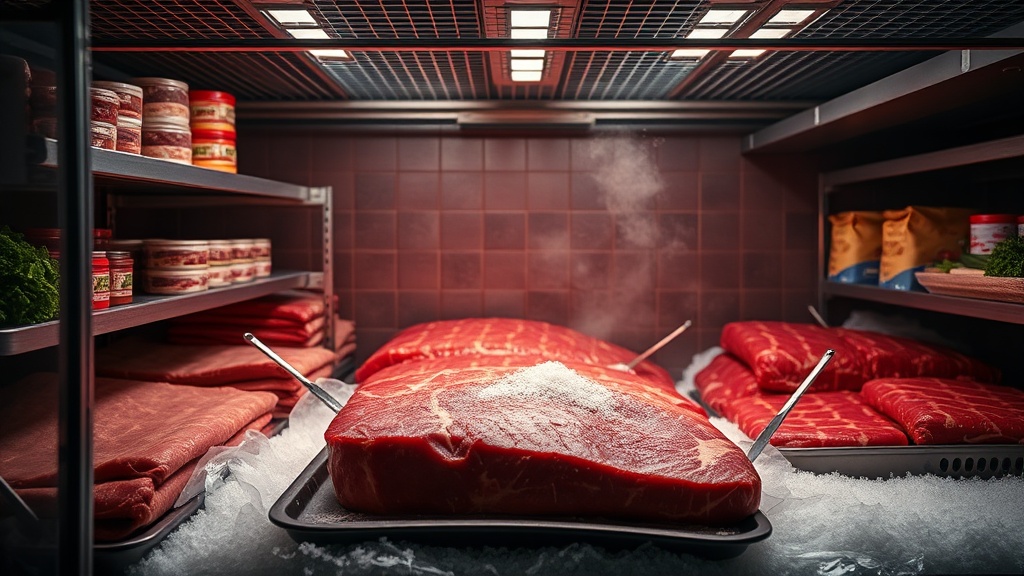
Stop Overpaying for Meat with These Smart Freezer Strategies

You will learn how to treat your freezer as a strategic asset to lower your protein expenditure by up to 50%. This post covers the specific math of unit pricing, the technical steps for long-term storage, and the inventory management systems required to prevent food waste and maximize your return on investment (ROI) when buying meat.
The Unit Price Audit: Why You Must Stop Buying by the Package
Most consumers make the mistake of looking at the "sticker price" of a package of chicken breasts or ground beef. This is a fundamental accounting error. To shop like a professional, you must ignore the total price and look exclusively at the price per pound (lb) or price per ounce (oz). Retailers often use smaller, more expensive packaging to distract from a higher unit price.
When you are shopping for meat, your goal is to identify the "price floor"—the lowest price a specific protein reaches during a standard retail cycle. For example, if you see chicken thighs at $1.49/lb at a local Kroger or Publix, but the weekly flyer shows they often hit $0.99/lb during seasonal sales, you now have a data point. You should only purchase that volume if it hits or nears that $0.99/lb threshold. This is how you build a stockpile that actually yields a margin of savings.
Calculating the Real Cost of Bulk Purchases
Bulk buying is only a "deal" if the unit price is significantly lower than your standard purchase. If a 5lb pack of ground beef is $24.99 ($5.00/lb) and a 1lb pack is $5.99 ($5.99/lb), you are saving $0.99 per pound. However, if the 5lb pack is $31.00 ($6.20/lb), you are actually paying a premium for the bulk packaging. Always use your phone's calculator at the meat counter to verify the math before adding the item to your cart.
The Three Pillars of Meat Preservation
To successfully implement a freezer strategy, you cannot simply throw butcher paper and plastic wrap into your freezer. Improper storage leads to freezer burn, which is a direct loss of capital. Freezer burn occurs when moisture escapes the meat and is replaced by air, ruining the texture and flavor. To protect your investment, follow these three technical protocols.
1. Vacuum Sealing: The Gold Standard
If you are serious about lowering your grocery bill, a vacuum sealer is not a luxury; it is a required piece of equipment. By removing all oxygen from the environment, you prevent oxidation and freezer burn. This method allows you to store meat for 2 to 3 years without quality degradation. When buying large quantities of steak or poultry, vacuum sealing ensures that the moisture stays within the muscle fibers.
2. Double Wrapping and Flash Freezing
If you do not own a vacuum sealer, you must use the double-wrap method. Wrap the meat tightly in plastic wrap, then a layer of aluminum foil, and finally place it in a heavy-duty freezer bag. This creates multiple barriers against air. Additionally, use "flash freezing" for smaller items like shrimp or individual chicken breasts. Lay them flat on a baking sheet in the freezer for two hours before bagging them. This prevents them from freezing into one giant, unusable block.
3. Portion Control and Labeling
Never freeze a whole chicken or a large roast without pre-portioning it. You should only thaw exactly what you need for a specific recipe. A common mistake is thawing a 3lb roast only to realize you only needed 1lb for your recipe, forcing you to refreeze the remaining 2lbs. Refreezing thawed meat degrades the cellular structure and reduces the ROI of your purchase. Label every bag with two pieces of information: the date of purchase and the weight/type of meat.
Strategic Inventory Management
A freezer is only an asset if you know what is inside it. A "black hole freezer" is a common household problem where money goes to die because you cannot find your inventory. To manage this, you must treat your freezer like a warehouse.
- The FIFO Method: First-In, First-Out. Always place newer purchases at the back and move older items to the front. This ensures you use older stock before it reaches its expiration limit.
- The Inventory Sheet: Keep a dry-erase board on the side of your freezer or a digital spreadsheet on your phone. Every time you add an item, log it. If you buy 10lbs of ground beef, log "10lbs Ground Beef - [Date]".
- Monthly Audits: Once a month, perform a full inventory count. This prevents "duplicate buying," where you buy more of a product because you forgot you already had it in stock.
Optimizing Your Shopping Trips for Maximum Yield
To get the best meat at the lowest prices, you must time your purchases. Grocery stores operate on cycles, and meat is often heavily discounted to move inventory before expiration dates. You can leverage this to your advantage by being a proactive shopper rather than a reactive one.
Check the "Manager's Special" sections or the "Reduced for Quick Sale" meat cases. These are items that are approaching their "Sell By" date but are still perfectly safe to consume if cooked or frozen immediately. This is often where the highest ROI is found. If you see a high-quality cut of meat at 50% off because it expires tomorrow, buy it, vacuum seal it, and get it into the freezer immediately. This is a high-yield tactic that significantly reduces your weekly food cost.
You can further optimize your budget by combining these meat strategies with other savings methods. For example, learning how to save 40% on groceries using store apps and loyalty programs will allow you to stack digital coupons on top of these bulk-buying techniques, effectively lowering your price-per-pound even further.
The Math of the "Meat-Heavy" Meal Plan
A successful freezer strategy requires a shift in how you plan meals. Instead of deciding what to eat and then shopping, you should shop based on your current inventory. This is "Inventory-First Meal Planning."
- Check the Inventory: Look at your freezer list. You see you have 2lbs of pork chops and 1lb of ground turkey.
- Build the Menu: Your meals for the next three days are now dictated by those items. You will make pork chops with potatoes and a turkey chili.
- Buy the "Fillers": Only go to the store to buy the fresh produce or pantry staples needed to complete those meals.
This method eliminates the "emergency grocery run," which is where most unplanned, high-margin spending occurs. When you shop for a specific, limited list based on what you already own, you maintain control over your household's cash flow.
Summary of the Meat-Buying Protocol
To ensure you are getting the highest possible return on your protein spend, adhere to these non-negotiable rules:
- Always calculate the price per pound to verify if a bulk deal is actually a deal.
- Use a vacuum sealer to extend the shelf life and prevent the loss of capital via freezer burn.
- Portion meat before freezing to avoid the waste associated with thawing large quantities.
- Maintain a strict inventory log to prevent duplicate purchases and ensure FIFO rotation.
- Target "Manager's Specials" to acquire high-quality proteins at a fraction of the standard retail price.
By treating your meat purchases as a strategic procurement process rather than a casual errand, you move from being a consumer to being a household CFO. The math is clear: more time spent in the planning and preservation phase leads to significantly less money spent at the checkout counter.