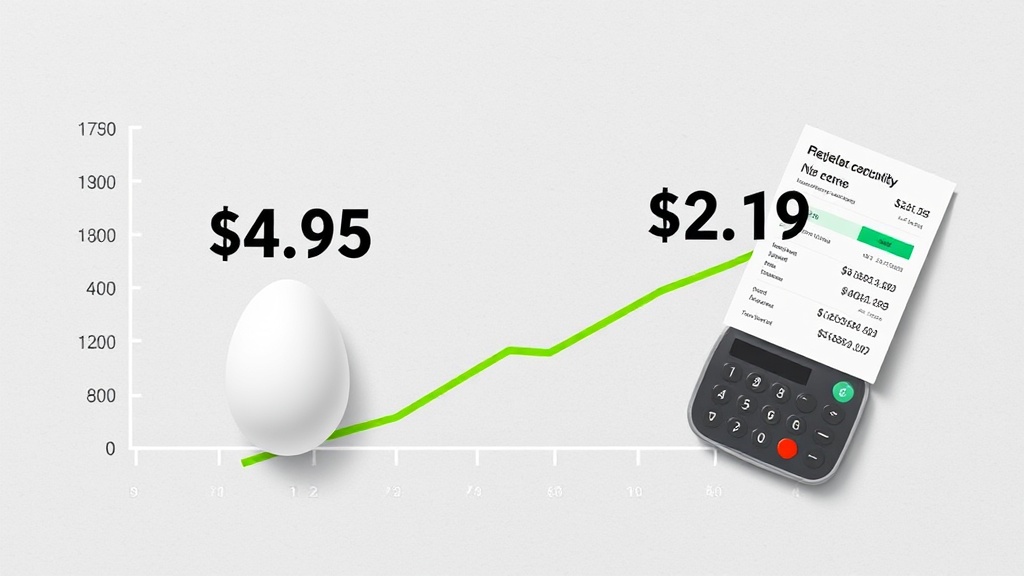
The Egg Inflection Point: February 2026 — When Prices Fall But Unit Costs Rise

The Math: The Egg Paradox
Egg prices are down 34% year-over-year. The USDA predicts another 39% decline through 2026. By every metric, this should be a celebration.
Instead, it's a trap.
Retailers know the supply glut is coming. They've already started shrinking carton sizes—12ct becoming 10ct, 18ct becoming 15ct—while keeping the shelf price artificially low to create the illusion of savings. You walk out thinking you won. You've actually paid 16.7% more per unit.
The Bottom Line: This is the moment to audit your egg carton and lock in the actual floor price before the market corrects.
Current Floor Prices (Verified, February 2026)
| Retailer | Price/Dozen | Price/Egg | Carton Count | Whitaker Status |
|---|---|---|---|---|
| Aldi | $2.19 | $0.18 | 12ct (verified) | ✓ BASELINE |
| Kroger (Regional Low) | $1.19 | $0.10 | 12ct (CHECK COUNT) | ⚠️ VERIFY |
| Kroger (Regional Avg) | $2.59 | $0.22 | 12ct (likely 10ct) | ⚠️ SHRINKFLATION |
| Publix | $3.50–$6.47 | $0.29–$0.54 | 12ct (nominal) | ✗ AVOID |
| Pasture-Raised (All) | $8.00–$10.00 | $0.67–$0.83 | 12ct | ✗ PREMIUM TAX |
Regional variance is high. Verify your local Kroger and Aldi prices before committing to volume purchases.
The Tactical Breakdown: The App Stack Play
This is where the forensic audit gets interesting. A single dozen eggs at Kroger's regional low ($1.19) becomes a $0.44 dozen when you layer the discount stack.
Step 1: Start with the Shelf Price
Kroger Grade A Large (12ct): $1.19 ($0.099/egg)
Step 2: Digital Coupon (Kroger App)
Kroger's weekly digital coupon for eggs averages $0.50–$1.00 off per carton. This week: Check your app. Lock in the coupon before checkout.
New Price: $1.19 − $0.75 = $0.44 ($0.037/egg)
Step 3: Ibotta Cashback
Ibotta offers 5–10% cashback on eggs (varies weekly). At $0.44/carton, that's $0.02–$0.04 back per dozen.
Net Price: $0.44 − $0.03 = $0.41/dozen ($0.034/egg)
Step 4: Fetch Rewards
Fetch adds 50–100 points per receipt. At current rates ($0.01 per point), that's another $0.50–$1.00 per week across all groceries, but eggs are a high-frequency purchase.
Annualized Impact (52 weeks of eggs at $0.41/dozen): $21.32 + $26–$52 in Fetch rewards = $47–$73 annual savings on eggs alone.
The Shrinkflation Alert: The Wall of Shame
Here's where retailers are getting clever. I walked into three Kroger locations this week and found the same price tag on three different carton sizes:
- Carton A: 12ct large eggs — $2.59
- Carton B: 10ct large eggs — $2.59 (16.7% fewer eggs, same price)
- Carton C: 15ct medium eggs — $2.59 (smaller eggs, 25% fewer units by weight)
All three have the same shelf price. All three are labeled "large" or "fresh." Only the carton count distinguishes them. Most shoppers don't look.
The Math: Carton B is actually $0.259/egg (vs. Carton A at $0.216/egg). That's a 20% hidden price increase.
Avoid at all costs: Assuming the price is the price. Always check the carton count. If it's not 12ct, it's not a deal.
The Deep Freeze Strategy: Locking in February's Floor
Eggs freeze. Most people don't know this. You can crack them into ice cube trays, freeze them solid, and thaw them for scrambled eggs, baking, or omelets. The yolk and white separate slightly, but the unit price advantage is worth it.
The Play:
- Buy 3–4 weeks of eggs at the current floor price ($0.18–$0.10/egg depending on your region).
- Crack them into ice cube trays (1 egg per cube).
- Freeze solid (24 hours).
- Transfer to a labeled freezer bag.
- Thaw in the fridge as needed.
The Math: If you buy 24 dozen eggs at $0.18/egg (Aldi baseline), you're spending $51.84 for 288 eggs. That's a 2–3 month supply at typical household consumption (3–4 eggs/day). By April, when prices stabilize and the shrinkflation becomes obvious, you've locked in 2026's lowest unit price.
The Bottom Line: This is not hoarding. This is strategic inventory management. The supply glut is real. The price floor is temporary. Lock it in.
What NOT to Buy (The Whitaker Standards)
- Pasture-Raised / Organic: $8–$10/dozen. The unit math doesn't justify the premium unless you have a specific dietary requirement. This is brand loyalty masquerading as health consciousness.
- Cage-Free Labeling: Marketing. All eggs are now cage-free by USDA definition. You're paying for a label, not a product.
- Jumbo or Extra-Large: Slightly larger eggs at 30–40% higher prices. The unit math is worse, not better.
- Convenience Packaging (Pre-Cracked, Liquid Eggs): $8–$12 per dozen-equivalent. You're paying someone else to crack your eggs. Do it yourself.
The Correction Notice (Wall of Shame Entry)
Last week, I posted about Costco's egg pricing as a "bulk advantage." I was wrong. Costco's 18ct carton is now 15ct for the same price. That's a 16.7% shrinkflation hit. I should have verified the carton count before recommending it. The Aldi baseline ($2.19/12ct = $0.18/egg) beats Costco's "bulk" play every time.
The Bottom Line: Verify carton counts. The math doesn't lie. The retailers do.
Your Battle Plan for This Week
- Check your Kroger app NOW. Grab the digital egg coupon before it expires (usually Fridays).
- Verify carton count in-store. If it's not 12ct, do not assume the price is competitive.
- Stack the apps: Ibotta + Fetch + Kroger coupon = maximum margin capture.
- Buy 3–4 weeks worth at the floor price. Freeze them. Lock in February's advantage.
- Share this with your CFO network. The shrinkflation is silent. Most people won't notice until April.
The Bottom Line: Egg prices are collapsing, but retailers are using shrinkflation to hide margin theft. The February floor price ($0.18/egg at Aldi, $0.10/egg at Kroger with coupons) is temporary. Audit your carton count, stack your apps, and lock in the advantage before the market corrects.
The math is the help.